

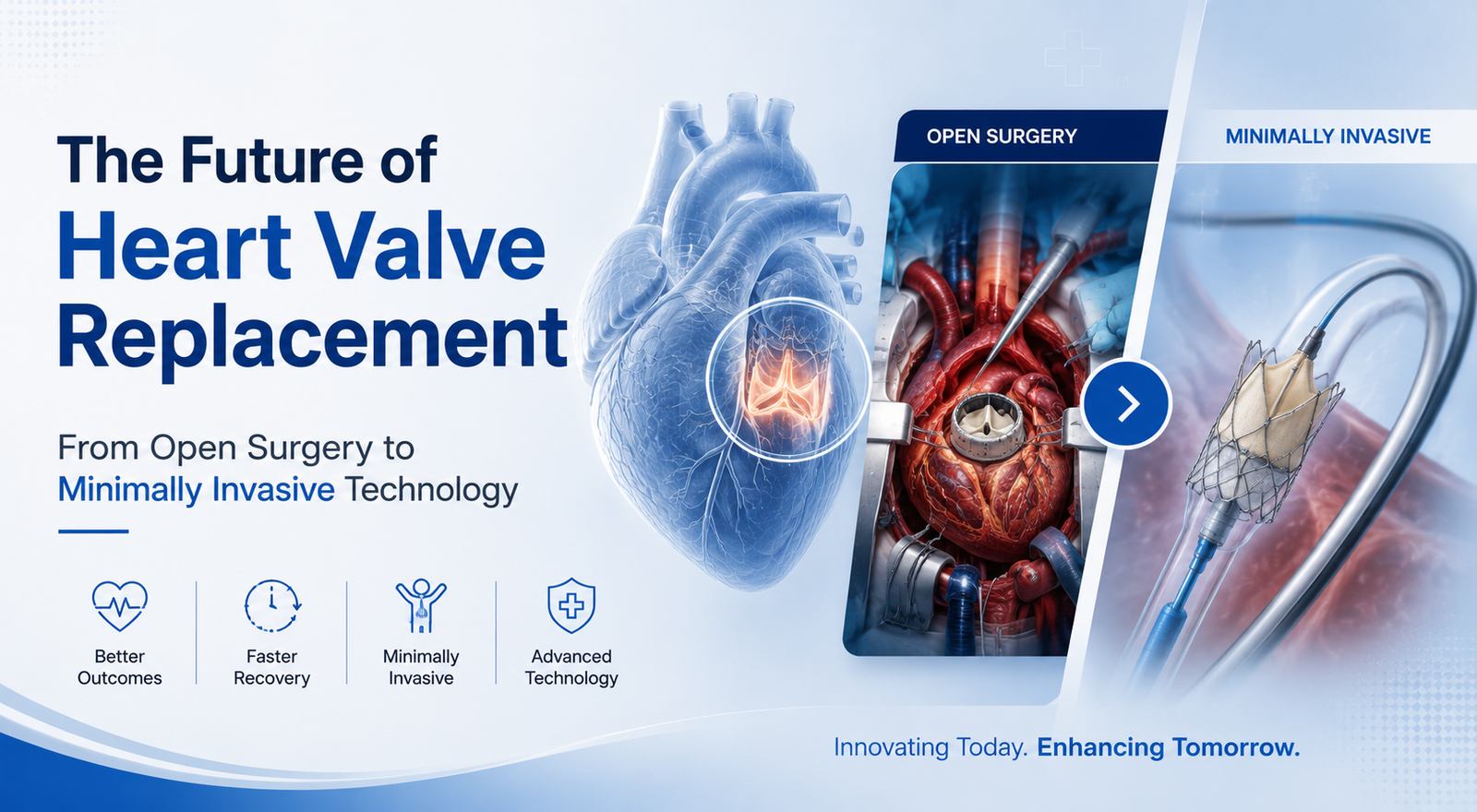
Heart valve disease affects millions of people worldwide, and for decades the only path to treatment was open-heart surgery — a major operation involving a sternotomy, cardiopulmonary bypass, and weeks of recovery. Today, that landscape looks radically different. Minimally invasive heart valve replacement technology has transformed cardiac care, offering patients shorter hospital stays, faster recovery times, and outcomes that rival traditional surgery. This shift represents one of the most significant advances in modern cardiovascular medicine, and understanding where the field is headed matters for clinicians, medical device innovators, and patients alike.
The Legacy of Open-Heart Valve Surgery
Traditional heart valve replacement surgery has saved countless lives since the first prosthetic valve implants in the 1960s. The procedure typically requires a full sternotomy, placing the patient on a heart-lung machine while the surgeon replaces the damaged valve with a mechanical or bioprosthetic device. While effective, this approach comes with real trade-offs: extended hospitalization, significant post-operative pain, a lengthy rehabilitation period, and elevated risk for older patients or those with multiple comorbidities.
For high-risk and elderly populations — a growing share of the valve disease patient pool — these risks often meant that surgery wasn’t a viable option at all. This treatment gap is precisely what drove the development of catheter-based and minimally invasive alternatives.
The Rise of Transcatheter Valve Technology
The introduction of Transcatheter Aortic Valve Replacement (TAVR) marked a turning point in structural heart disease treatment. Instead of opening the chest, surgeons deliver a compressed replacement valve through a catheter — typically inserted via the femoral artery — and expand it into place within the diseased native valve. What once required a multi-hour operation and a week-plus hospital stay can now often be completed in under two hours, with many patients discharged within 24 to 48 hours.
TAVR was initially approved for patients considered too high-risk for open surgery, but clinical trials have steadily expanded its indications to intermediate- and low-risk patients as well. This progression reflects growing confidence in transcatheter techniques as durable, long-term solutions rather than compromises reserved for the frailest patients.
Alongside TAVR, Transcatheter Mitral Valve Replacement (TMVR) and mitral valve repair technologies — including edge-to-edge clip devices — are following a similar trajectory, addressing the anatomically complex mitral position where minimally invasive access has historically been more challenging.
Key Innovations Shaping the Next Generation of Valve Technology
Several converging technologies are pushing minimally invasive valve replacement forward:
Next-generation valve materials. Advances in biomaterials and tissue engineering are producing valves designed for greater durability and reduced calcification, addressing one of the longstanding concerns with bioprosthetic valves in younger patients.
Smaller delivery systems. Reduced catheter and sheath profiles are expanding vascular access options and lowering the risk of access-site complications, a meaningful factor for patients with smaller or more diseased vasculature.
Repositionable and retrievable valves. Newer valve designs allow physicians to reposition or fully recapture a valve during deployment, improving precision and reducing the risk of paravalvular leak — a key complication that earlier-generation devices struggled to avoid.
Imaging and procedural planning software. 3D imaging, CT-based sizing algorithms, and fusion imaging are allowing structural heart teams to plan procedures with a level of precision that was unimaginable a decade ago, reducing intraoperative surprises and improving valve sizing accuracy.
Robotic-assisted and AI-guided navigation. Emerging robotic platforms and AI-driven procedural guidance are beginning to enter the structural heart space, promising even greater consistency and reduced procedural variability across centers with different levels of operator experience.
Bioprosthetic vs. Mechanical: An Evolving Conversation
The choice between bioprosthetic and mechanical valves has always involved a trade-off between durability and the need for lifelong anticoagulation therapy. As transcatheter bioprosthetic valves demonstrate increasingly strong long-term durability data, and as valve-in-valve procedures make it possible to treat a failing bioprosthetic valve without repeat major surgery, the calculus is shifting — particularly for younger and intermediate-risk patients who previously may have defaulted to mechanical valves to avoid reoperation.
Why Minimally Invasive Approaches Matter for Patient Outcomes
The clinical case for minimally invasive valve replacement extends beyond convenience. Reduced procedural trauma translates into measurable outcome benefits:
- Shorter ICU and overall hospital stays
- Lower rates of post-procedural infection
- Reduced blood loss and transfusion requirements
- Faster return to baseline function, particularly important for elderly patients
- Lower overall procedural mortality in appropriately selected patients
These benefits also carry significant implications for healthcare systems, where shorter recovery times and reduced hospital resource utilization translate into meaningful cost savings alongside better patient experience.
Challenges That Remain
Despite the pace of innovation, minimally invasive valve replacement isn’t without challenges. Long-term durability data for newer transcatheter valves, particularly in younger patients who may need a valve to last several decades, is still maturing. Access-related vascular complications, though declining, remain a consideration. And structural heart programs require significant investment in imaging infrastructure, hybrid operating rooms, and specialized training — meaning access to the most advanced minimally invasive options still varies by geography and institution.
Device and consumable manufacturers also face the ongoing challenge of balancing innovation speed with the rigorous safety and efficacy standards required for cardiovascular implants, where the margin for error is exceptionally small.
What’s Next for Heart Valve Replacement Technology
Looking ahead, the trajectory of heart valve replacement technology points toward:
- Broader use in lower-risk and younger patient populations as long-term durability data accumulates
- Continued miniaturization of delivery systems for safer, more accessible procedures
- Bioengineered and tissue-engineered valves designed to grow or remodel with the patient
- Greater integration of AI in pre-procedural planning, real-time guidance, and post-procedural monitoring
- Expansion of transcatheter mitral and tricuspid solutions, historically the most anatomically challenging valve positions to treat percutaneously
Conclusion
The journey from open-chest valve surgery to minimally invasive, catheter-based replacement represents one of the defining success stories in modern cardiovascular medicine. As materials science, imaging technology, and procedural technique continue to advance, minimally invasive heart valve replacement is poised to become the standard of care across an even broader range of patients — not just an alternative for those who can’t tolerate open surgery. For clinicians, medical device developers, and healthcare systems, staying ahead of this shift means understanding not just where the technology stands today, but where the next decade of innovation is headed.