

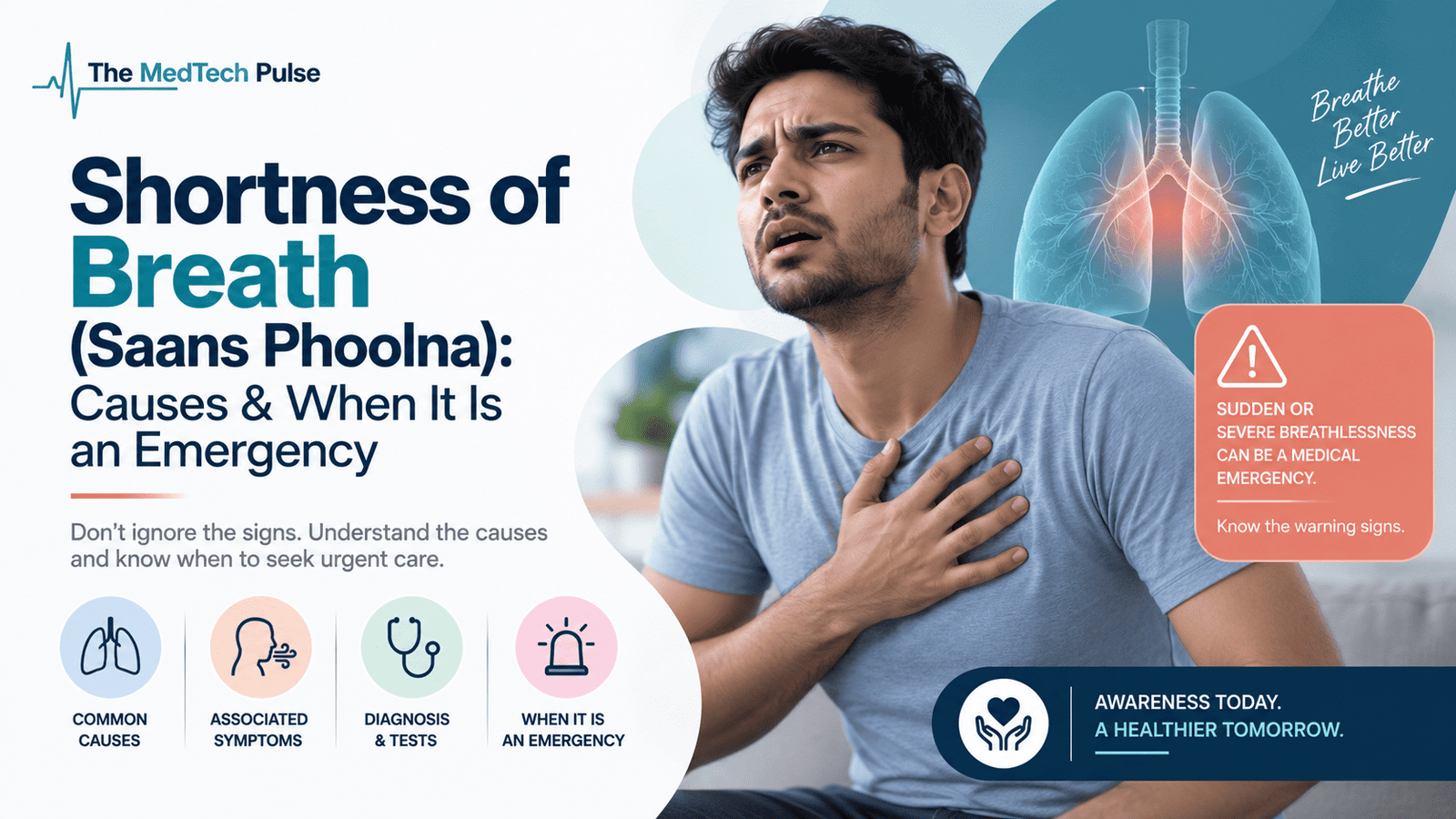
“Saans phoolna” — that feeling of your breath running short, of needing to pause mid-sentence or mid-stair-climb to catch up — is something almost every Indian adult has felt at some point. Most of the time, it’s harmless: a flight of stairs climbed too fast, a hot and humid day, or simply being a little out of shape. But shortness of breath is also one of the symptoms doctors take most seriously, because it can be the first sign of something genuinely urgent — a heart problem, a lung condition, or a level of low oxygen that needs immediate correction.
This guide will help you understand what’s actually causing your breathlessness, how to tell mild from serious, how to use a pulse oximeter correctly if you have one, and — most importantly — exactly when to see a doctor versus when to go straight to the emergency room.
Common Causes of Shortness of Breath
Heart-Related Causes
The heart and lungs work as a single system to move oxygen through your body, so heart problems very often present as breathlessness rather than the “classic” chest pain people expect. Heart failure — where the heart can’t pump blood efficiently enough — causes fluid to back up into the lungs, leading to breathlessness that’s often worse when lying flat and may wake you up at night gasping for air. Other heart-related causes include coronary artery disease, arrhythmias (irregular heart rhythms), and heart valve problems. In India, given the country’s high burden of heart disease linked to diabetes, hypertension, and lifestyle factors, cardiac causes of breathlessness deserve genuine, prompt attention rather than being dismissed as “just tiredness.”
Lung-Related Causes
Asthma, chronic obstructive pulmonary disease (COPD), pneumonia, tuberculosis, and other lung conditions are extremely common causes of breathlessness in India. Asthma typically causes breathlessness alongside wheezing and chest tightness, often triggered by specific factors like dust, cold air, or exercise. COPD, strongly linked to smoking and also to biomass fuel and pollution exposure in India specifically, causes progressive, ongoing breathlessness that tends to worsen gradually over months and years rather than appearing suddenly.
Anemia
Low haemoglobin — extremely common in India, particularly among women, as covered in earlier articles in this series — reduces your blood’s ability to carry oxygen to your tissues. This makes the body work harder for ordinary activity, and breathlessness on exertion (climbing stairs, walking briskly, or even routine housework) is one of the most classic anemia symptoms, often alongside fatigue, pale skin, and dizziness. Anemia-related breathlessness is easily missed because people often attribute it to being “unfit” or “just tired,” when a simple blood test could identify a very treatable cause.
Anxiety and Panic Attacks
Anxiety-related breathlessness is genuinely common and genuinely real — it isn’t “just in your head” in a dismissive sense. During anxiety or a panic attack, breathing often becomes fast and shallow, sometimes with a sensation of not being able to get a full, satisfying breath, chest tightness, tingling in the hands, and a racing heart. What distinguishes it from more dangerous causes is usually the pattern: it tends to come on with a specific stressor or without physical exertion, and typically improves with calming techniques over minutes, rather than progressively worsening.
Air Pollution
India’s air quality is an increasingly significant, well-documented contributor to breathlessness, particularly in northern cities during winter months when AQI regularly reaches “poor” to “severe” levels. Pollution can trigger acute breathlessness in people with underlying asthma or COPD, and chronic exposure over years contributes to declining lung function even in people without a prior diagnosed lung condition. On high-pollution days, even healthy individuals may notice mild breathlessness or chest discomfort during outdoor activity.
Obesity
Excess body weight increases the effort required for breathing in several ways — added weight on the chest wall restricts lung expansion, extra tissue increases the body’s overall oxygen demand, and obesity is strongly linked to conditions like sleep apnea, which itself causes breathlessness and poor-quality sleep. Weight-related breathlessness typically develops gradually and is most noticeable during physical exertion, but it’s a genuinely important, modifiable contributor worth addressing directly with a doctor rather than assuming it’s simply “normal” for one’s body size.
Other Contributing Factors
Deconditioning (simply being out of regular physical practice), high altitude, extreme heat and humidity, and certain medications can all cause mild breathlessness in otherwise healthy people. Pregnancy also commonly causes mild breathlessness, particularly in later trimesters, due to the growing uterus limiting lung expansion and increased oxygen demand — usually normal, but still worth mentioning to your doctor at routine visits.
Mild vs. Serious Breathlessness: How to Tell the Difference
Likely Mild
- Occurs predictably with exertion — climbing several flights of stairs, brisk exercise, hot weather — and improves quickly with rest
- Doesn’t interfere with your ability to speak in full sentences
- No chest pain, blue-tinged lips, or associated dizziness
- You can identify a clear, reasonable trigger (heat, exercise intensity, anxiety-provoking event)
- Improves within a few minutes of stopping the activity or calming down
Concerning and Needs Evaluation
- Occurs with minimal or no exertion — for instance, while sitting or during light activities you could previously do easily
- Is new, or has been steadily worsening over days to weeks
- Wakes you up at night, or is worse when lying flat
- Comes with chest pain, palpitations, swelling in the legs or ankles, or a persistent cough
- Doesn’t improve with rest
- Is accompanied by fatigue that’s out of proportion to your usual activity level
If your breathlessness fits the second list, it’s genuinely worth a doctor’s evaluation rather than waiting to see if it resolves on its own.
Red Flag Symptoms That Require Emergency Care
Certain features of breathlessness mean you should go to the emergency room immediately, or call for emergency medical help — not wait for a scheduled appointment.
Go to the ER immediately if breathlessness is accompanied by:
- Chest pain or pressure, especially if it spreads to the arm, jaw, or back
- Bluish discolouration of the lips, face, or fingertips (a sign of dangerously low oxygen)
- Sudden, severe breathlessness that comes on rapidly, especially without a clear cause
- Inability to speak in full sentences due to breathlessness
- Confusion, extreme drowsiness, or difficulty staying alert
- Fainting or near-fainting
- Rapid or irregular heartbeat alongside breathlessness
- Coughing up blood
- Swelling in the legs combined with breathlessness that’s worse lying down (a possible sign of heart failure)
- Breathlessness after a leg injury, long flight, or period of immobility, combined with leg swelling or pain (possible blood clot)
- A known allergy trigger with breathlessness, swelling of the face or throat, and/or hives (possible severe allergic reaction/anaphylaxis)
These aren’t symptoms to monitor and wait on — they represent situations where minutes genuinely matter for treatment outcomes.
How to Use a Pulse Oximeter Correctly
A pulse oximeter is a small device that clips onto your fingertip and measures your blood oxygen saturation (SpO2) along with your pulse rate. It’s inexpensive, widely available at pharmacies across India, and a genuinely useful tool for monitoring breathlessness at home — but only if used correctly.
Step-by-Step Use
- Warm your hands if they’re cold — poor circulation from cold fingers can give an inaccurate reading
- Remove nail polish or artificial nails on the finger you’re using, as these can interfere with the light sensor
- Sit still and rest your hand on a stable surface at heart level
- Insert your finger fully into the device, making sure it’s positioned correctly per the device’s instructions
- Wait 30–60 seconds for the reading to stabilise — don’t rely on the very first number that appears
- Record both the SpO2 percentage and pulse rate, and note the time
Understanding Your Reading
- 95–100% is generally considered a normal, healthy oxygen saturation level for most people
- 92–94% is a level worth discussing with a doctor, especially if it’s a new finding or accompanied by symptoms
- Below 92% generally warrants contacting a healthcare provider
- 88% or below is considered a medical emergency — head to the nearest emergency room
Important context: some people with chronic lung conditions like COPD may have a lower “normal” baseline for them specifically, so it’s worth knowing your own typical reading if you have a chronic condition, rather than assuming everyone should sit at 98–100%. Also, keep in mind that darker skin tones, poor circulation, and smoking can all reduce the accuracy of pulse oximeter readings slightly — so use the device as one useful piece of information, not the sole determinant of whether to seek care. If you feel seriously breathless but your oximeter reads normal, trust your symptoms and seek medical attention anyway — a normal oxygen reading doesn’t rule out every serious cause of breathlessness, including some heart-related and anxiety-related causes.
When to See a Doctor vs. When to Go to the ER
See a Doctor (Routine or Urgent Appointment) If:
- Breathlessness has been gradually developing over days to weeks
- It occurs predictably with a specific level of exertion that’s lower than what you could previously manage
- You suspect anemia, a lung condition, or want to check whether pollution or weight is contributing
- You have risk factors (smoking history, obesity, known heart or lung disease) and want to be proactively evaluated
- Breathlessness is mild but persistent, and affecting your quality of life
Go to the ER Immediately If:
- Any of the red-flag symptoms listed above are present
- Breathlessness is sudden, severe, and unexplained
- You have chest pain, blue lips, or confusion alongside breathlessness
- Your pulse oximeter reads 88% or below
- You simply feel that something is seriously wrong — this instinct, especially regarding breathing, is worth trusting rather than second-guessing
Simple Lifestyle Measures
For breathlessness linked to modifiable factors — deconditioning, weight, mild pollution exposure — several practical steps genuinely help:
- Gradual, regular physical activity — even short daily walks, built up slowly, improve cardiovascular and lung fitness over time
- Achieving and maintaining a healthy body weight, which reduces the mechanical and metabolic burden on both heart and lungs
- Avoiding smoking entirely, and minimising secondhand smoke exposure
- Monitoring AQI and limiting outdoor exertion on high-pollution days, particularly if you have any underlying lung sensitivity
- Practising breathing exercises, such as pursed-lip breathing or diaphragmatic breathing, which can genuinely help manage breathlessness in both anxiety-related and certain chronic lung conditions
- Addressing anemia through diet and, if needed, supplementation — following proper testing, as covered in our article on persistent fatigue
- Managing anxiety through relaxation techniques, and seeking professional support if panic-related breathlessness is frequent or significantly affecting your life
- Staying well-hydrated and maintaining good posture, since slouched posture can genuinely restrict lung expansion over time
Frequently Asked Questions
Q: Is it normal to feel breathless while climbing stairs in India’s heat? Mild breathlessness with exertion, especially in hot and humid weather, is common and usually not a cause for concern, particularly if it improves quickly with rest. It becomes worth evaluating if it’s happening with less and less exertion over time, or if it’s accompanied by chest pain, dizziness, or other symptoms.
Q: Can anxiety alone cause breathlessness without any heart or lung problem? Yes, genuinely. Anxiety and panic attacks are a well-recognised, real cause of breathlessness on their own. That said, if you haven’t had breathlessness properly evaluated before, it’s worth ruling out other causes with a doctor first, rather than assuming it’s anxiety without confirmation — especially since anxiety and cardiac symptoms can sometimes feel similar.
Q: Should I buy a pulse oximeter for home use? It’s a reasonable, inexpensive addition to a home health kit, particularly if you have a family member with a chronic lung or heart condition, are elderly, or simply want a useful monitoring tool during respiratory illness. It’s a helpful piece of information, not a replacement for medical evaluation when you’re genuinely concerned.
Q: My oxygen level is 96% but I still feel breathless — should I worry? Yes, it’s still worth taking seriously. A normal pulse oximeter reading doesn’t rule out all causes of breathlessness — some cardiac conditions and anxiety, for instance, can cause real breathlessness with a normal oxygen saturation. Trust your symptoms and seek medical evaluation if the breathlessness is new, worsening, or concerning to you.
Q: Can pollution alone cause serious breathlessness in a healthy person? Very high pollution levels can cause noticeable breathlessness even in people without any underlying lung condition, though it’s usually milder than what someone with asthma or COPD would experience on the same day. If you consistently notice breathlessness on high-AQI days, it’s worth discussing with a doctor, since it may indicate early or undiagnosed lung sensitivity.
Q: How is breathlessness from a heart problem different from a lung problem? It’s genuinely hard to tell apart based on symptoms alone, and doctors often need tests (such as an ECG, chest X-ray, or blood tests) to distinguish between them, since both can cause very similar breathlessness. Heart-related breathlessness is often worse lying flat and may come with ankle swelling; lung-related breathlessness often comes with wheezing or a persistent cough. If in doubt, let a doctor make this determination rather than guessing.
This article is for general educational purposes and does not replace professional medical advice, diagnosis, or treatment. If you or someone you’re with is experiencing any of the red-flag symptoms described above, seek emergency medical care immediately. For persistent or unexplained breathlessness, please consult a qualified physician.
References
- Mayo Clinic — Shortness of Breath: Causes and Definition (https://www.mayoclinic.org/symptoms/shortness-of-breath/basics/causes/sym-20050890)
- Mayo Clinic — Low Blood Oxygen (Hypoxemia): Causes and Definition (https://www.mayoclinic.org/symptoms/hypoxemia/basics/causes/sym-20050930)
- Cleveland Clinic — Blood Oxygen Level: What It Is & How to Increase It (https://my.clevelandclinic.org/health/diagnostics/22447-blood-oxygen-level)
- Sharma A, Kaeley N, et al. — Using Lung Ultrasound Combined With NT-proBNP to Differentiate Acute Heart Failure From COPD and Asthma in Emergency Department Patients, AIIMS Rishikesh, PMC (https://www.ncbi.nlm.nih.gov/pmc/articles/PMC11806969/)
- Inogen — Oxygen Saturation: Normal Oxygen Levels & Shortness of Breath (https://www.inogen.com/blog/short-breath-oxygen-saturation-level-normal/)
Note: This article reflects general clinical guidance current at the time of writing. Pulse oximeter accuracy and “normal” oxygen levels can vary by individual, especially those with chronic lung conditions; consult your doctor to understand your personal baseline. This article does not replace professional medical advice, diagnosis, or treatment.