

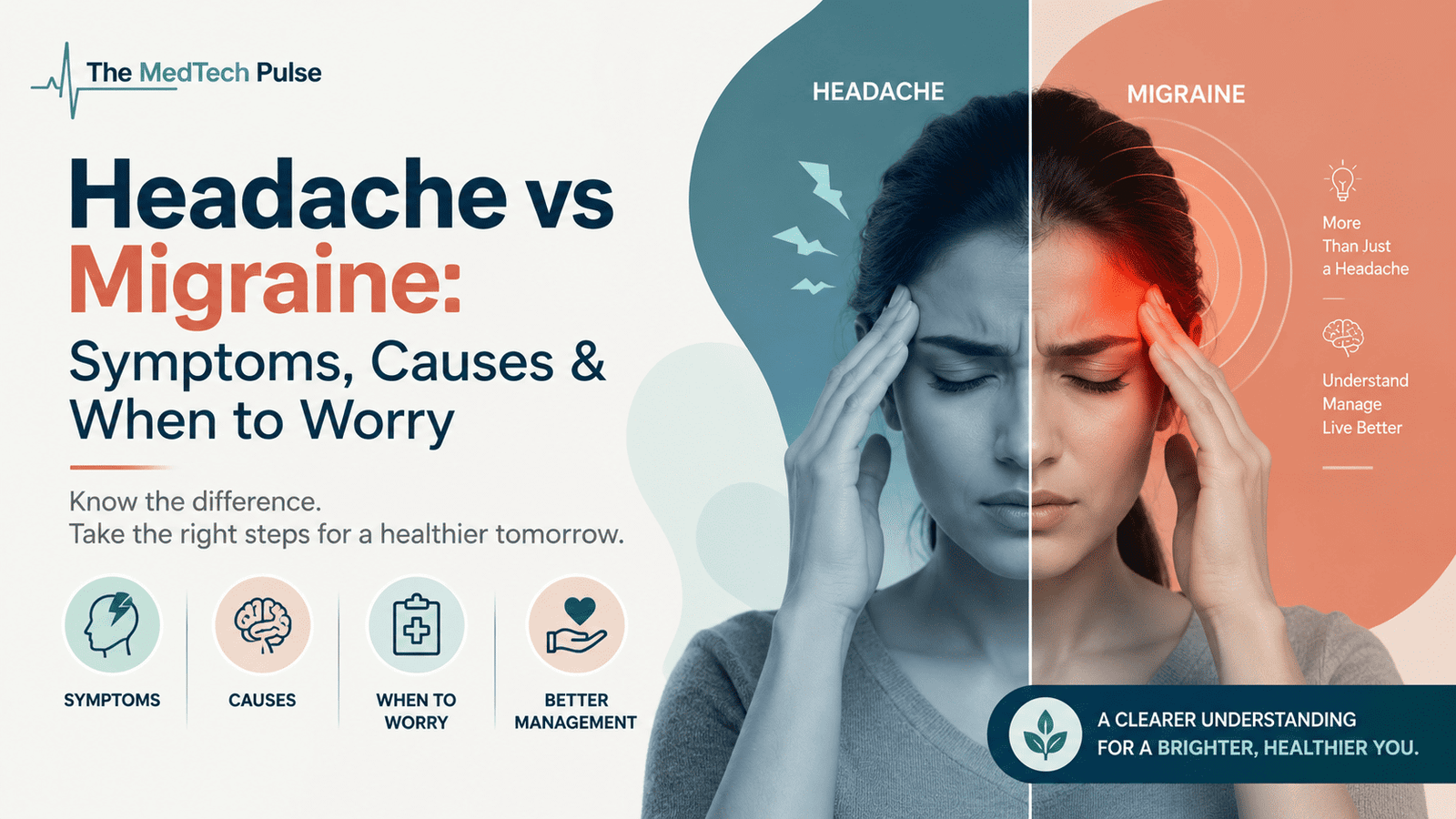
Almost everyone gets a headache now and then. But how do you know when it’s just a “normal” headache from a stressful day at work, and when it’s something more — like a migraine, or worse, a warning sign of something that needs urgent medical attention? This is one of the most common questions patients ask neurologists and general physicians in India, and for good reason: headache disorders affect a huge share of India’s population. Community-based studies from Karnataka and Delhi-NCR have found that the one-year prevalence of migraine in India runs as high as 25–26%, notably higher than the global average of around 15%, while tension-type headache affects roughly a third of adults at some point in a year.
This guide breaks down the real differences between a common headache and a migraine, why headaches seem to be so common in Indian cities and towns specifically, and — most importantly — the warning signs that mean you shouldn’t just pop a painkiller and wait it out.
Headache vs Migraine: What’s Actually the Difference?
What a Common (Tension) Headache Feels Like
The most common type of headache people experience is called a tension-type headache. It typically feels like:
- A dull, constant pressure or tightness, often described as a “band around the head”
- Mild to moderate pain on both sides of the head
- No nausea or vomiting
- Usually doesn’t get worse with normal physical activity like climbing stairs or walking
- Some sensitivity to light or noise, but not both together, and usually mild
Tension headaches are typically triggered by stress, poor posture, eye strain, or fatigue, and they generally respond well to rest, hydration, and over-the-counter pain relief.
What a Migraine Feels Like
A migraine is a distinct neurological condition, not just a “bad headache.” Migraines typically involve:
- Throbbing or pulsating pain, usually on one side of the head (though it can be both sides)
- Moderate to severe intensity that interferes with daily activities
- Nausea, and often vomiting
- Sensitivity to both light and sound at the same time, sometimes also to smell
- Pain that worsens with routine physical activity
- In some people, an “aura” beforehand — visual disturbances like flashing lights, zigzag lines, or blind spots, or less commonly, tingling sensations or speech difficulty
A key distinguishing feature: migraines often come with a recognisable pattern. Many patients can identify specific triggers, and attacks tend to follow a similar course each time — sometimes with warning symptoms like mood changes, food cravings, or neck stiffness a day before the actual headache starts.
The Quick Comparison
| Feature | Common (Tension) Headache | Migraine |
|---|---|---|
| Pain type | Dull, pressing | Throbbing, pulsating |
| Location | Both sides, band-like | Often one side |
| Severity | Mild to moderate | Moderate to severe |
| Nausea/vomiting | Rare | Common |
| Light/sound sensitivity | Mild, one or the other | Strong, often both together |
| Effect on activity | Usually manageable | Often disabling |
| Duration | 30 minutes to several hours | 4 to 72 hours if untreated |
Common Causes of Headaches and Migraines in the Indian Context
While the underlying biology of tension headaches and migraines is well understood globally, several triggers are particularly relevant to daily life in India.
Stress and Long Work Hours
High-pressure work environments, long commutes, and the always-on culture of smartphone and email access are among the most commonly reported headache triggers across Indian cities. Chronic stress doesn’t just cause tension headaches directly — it’s also one of the most frequently cited migraine triggers in Indian clinical studies.
Air Pollution
India’s air quality, particularly in northern cities during winter months, is a genuine and growing headache trigger. Exposure to particulate matter and poor air quality has been linked to increased headache frequency, and patients with existing migraine often report that high-pollution days worsen both the frequency and intensity of their attacks.
Sinus Congestion and Allergies
Many Indians who believe they have “sinus headaches” are, in fact, experiencing migraine or tension headache with facial pressure — true sinus headaches caused by active sinus infection are less common than people assume. That said, genuine sinusitis, common during seasonal changes and in cities with high pollen and dust exposure, does cause facial pain and pressure that can be mistaken for, or can trigger, a migraine-type headache.
Dehydration and Heat
India’s summer heat, combined with often inadequate water intake during long working hours, is a well-documented headache and migraine trigger. Dehydration headaches are especially common during the peak summer months and are one of the simplest triggers to prevent.
Screen Time and Digital Eye Strain
With rising screen time — for work, study, and entertainment — digital eye strain has become an increasingly common headache trigger, particularly among students and IT sector professionals. Poor lighting, incorrect screen distance, and long uninterrupted screen sessions without breaks all contribute.
Irregular Meals and Skipped Sleep
Skipping meals, irregular sleep schedules (common during exam seasons, shift work, or festival periods), and excess caffeine or sudden caffeine withdrawal are all recognised migraine triggers reported consistently in Indian clinical research, alongside prolonged sun exposure and long-distance travel.
Hormonal Factors
Migraine is significantly more common in women than in men across every major Indian study — roughly two to three times more common — and hormonal fluctuations linked to the menstrual cycle, pregnancy, and menopause are well-established migraine triggers for many women.
Warning Signs That Need Immediate Medical Attention
This is the single most important section of this article. While the vast majority of headaches are not dangerous, certain symptoms — sometimes remembered by doctors using the acronym “red flags” — mean you should seek emergency medical care immediately, not wait and see.
Seek urgent medical attention if a headache is accompanied by:
- Sudden, severe headache that reaches maximum intensity within seconds to minutes — often described as “the worst headache of my life” (this can indicate bleeding in the brain)
- Headache with fever, stiff neck, confusion, or a rash (possible meningitis)
- Headache following a head injury, even if it seems minor at first
- New headache after age 50, especially if it’s a new type of headache you haven’t had before
- Weakness, numbness, or paralysis on one side of the body
- Sudden difficulty speaking, understanding speech, or confusion
- Vision loss, double vision, or a sudden change in vision
- Seizure accompanying the headache
- Headache that worsens with coughing, straining, or lying down
- Headache in someone with cancer or a weakened immune system
- Progressively worsening headaches over days or weeks that don’t respond to usual treatment
If any of these symptoms occur, go to the nearest emergency department immediately — do not wait for a scheduled doctor’s appointment.
When Should You See a Doctor (Even Without Emergency Symptoms)?
Beyond the emergency red flags above, it’s worth scheduling a consultation with a general physician or neurologist if:
- Your headaches are becoming more frequent or more severe over time
- You’re taking painkillers more than 2–3 days a week (this itself can cause “medication-overuse headache,” a recognised and common problem in India)
- Headaches are interfering with work, study, or daily life
- Over-the-counter medication no longer provides relief
- You suspect your headaches follow a migraine pattern but haven’t had a formal diagnosis
- You’re experiencing new symptoms alongside your usual headache pattern
An important, often overlooked statistic from Indian community studies: fewer than one in four people with a significant headache burden actually seek medical care for it. Many patients simply live with recurring headaches for years without a proper diagnosis or treatment plan, when effective, personalised management is available.
Home Care and Prevention Tips
For ordinary tension headaches and mild migraines without red-flag symptoms, several home strategies can genuinely help:
Immediate Relief
- Rest in a quiet, dark room, especially for migraine
- Apply a cold compress to the forehead or a warm compress to the neck and shoulders, depending on what feels better for you
- Stay hydrated — even mild dehydration can worsen headache intensity
- Gentle neck and shoulder stretches can ease tension-related headaches
Long-Term Prevention
- Maintain a regular sleep schedule. Both too little and too much sleep can trigger migraines.
- Eat at consistent times and avoid skipping meals, particularly breakfast.
- Limit continuous screen time, using the 20-20-20 rule: every 20 minutes, look at something 20 feet away for 20 seconds.
- Track your triggers. Keeping a simple headache diary — noting what you ate, your stress levels, sleep, and weather — can help identify your personal patterns over a few weeks.
- Stay hydrated throughout the day, particularly during India’s hot summer months.
- Moderate caffeine intake, and avoid sudden changes in your usual caffeine consumption.
- Manage stress through regular physical activity, yoga, or relaxation techniques, all of which have reasonable evidence for reducing headache frequency.
- Protect against pollution on high-AQI days by limiting outdoor exposure and using air purifiers indoors where possible, particularly if you already notice pollution as a personal trigger.
The Role of Medical Technology: When Is a CT or MRI Scan Actually Needed?
One of the most common questions patients ask is whether they need a brain scan for their headaches. The honest, evidence-based answer is: most headaches, including most migraines, do not require imaging.
Doctors typically recommend a CT scan or MRI only when specific red-flag symptoms are present, or when the clinical picture doesn’t fit a typical headache pattern. Imaging is generally considered when there is:
- A sudden, severe “thunderclap” headache (a CT scan, often followed by a lumbar puncture, is used urgently to rule out bleeding around the brain)
- Any of the neurological red-flag symptoms described above — weakness, vision changes, confusion, seizures
- A headache pattern that has changed significantly or worsened progressively without explanation
- A new headache in someone over 50 years old
- Signs suggesting increased pressure inside the skull, such as headache that’s worse in the morning or with coughing/straining
- A headache alongside signs of infection, or in a patient with a compromised immune system or known cancer
For typical migraine or tension headache without any red flags, a detailed clinical history and neurological examination by a doctor is usually sufficient for diagnosis — imaging is unlikely to change the treatment plan and exposes patients to unnecessary cost and, in the case of CT scans, radiation. This is a globally accepted principle in headache medicine, and reputable Indian hospitals and neurologists generally follow the same evidence-based approach: scan when there’s a genuine clinical reason to suspect something structural, not as a routine step for every headache complaint.
Frequently Asked Questions
Q: Can stress alone cause migraines, or only tension headaches? Stress is one of the most commonly reported triggers for both tension headaches and migraines. It doesn’t cause migraine as an underlying condition, but it very frequently triggers attacks in people who are already prone to migraine.
Q: Is it normal to get a headache every day? No. Headaches occurring on 15 or more days a month are considered a distinct medical concern (chronic daily headache) and often relate to medication overuse or an underlying condition that needs proper evaluation — this pattern shouldn’t be managed with self-medication alone.
Q: Are migraines hereditary? Yes, migraine often runs in families. If a parent has migraine, their children have a meaningfully higher chance of developing it too.
Q: Can eye problems cause frequent headaches? Yes. Uncorrected refractive errors (needing glasses or a change in prescription) are a common and easily fixable cause of recurring headaches, especially with screen use. An eye check-up is a reasonable first step for frequent headaches associated with reading or screen work.
Q: Is it safe to take painkillers regularly for migraine? Taking painkillers more than 2–3 days a week on a regular basis can itself cause medication-overuse headache, making headaches worse over time. If you need pain relief that often, it’s time to see a doctor for a proper prevention plan rather than continuing to self-medicate.
Q: Can migraine be cured completely? Migraine doesn’t currently have a permanent “cure,” but it is highly manageable. With the right combination of trigger identification, lifestyle changes, and, where needed, preventive medication prescribed by a doctor, most patients see a significant reduction in both frequency and severity of attacks.
This article is for general educational purposes and does not replace professional medical advice, diagnosis, or treatment. If you are experiencing any of the warning signs described above, seek emergency medical care immediately. For persistent or concerning headaches, please consult a qualified physician or neurologist.
References
- Kulkarni GB, et al. — The Prevalence and Burden of Migraine in India: Results of a Population-Based Study in Karnataka State (https://pmc.ncbi.nlm.nih.gov/articles/PMC4180629/)
- Rao GN, et al. — The Burden Attributable to Headache Disorders in India: Estimates from a Community-Based Study in Karnataka State (https://pmc.ncbi.nlm.nih.gov/articles/PMC4639543/)
- Das R, et al. — Prevalence, Burden, and Risk Factors of Migraine: A Community-Based Study from Eastern India, Neurology India (https://journals.lww.com/neur/fulltext/2017/65060/prevalence,_burden,_and_risk_factors_of_migraine_.23.aspx)
- Rao GN, et al. — Headache Prevalence and Demographic Associations in the Delhi and National Capital Region of India (https://www.ncbi.nlm.nih.gov/pmc/articles/PMC11212249/)
- Rao GN, et al. — Headache Disorders and Public Ill-Health in India: Prevalence Estimates in Karnataka State, PubMed (https://pubmed.ncbi.nlm.nih.gov/26197976/)