

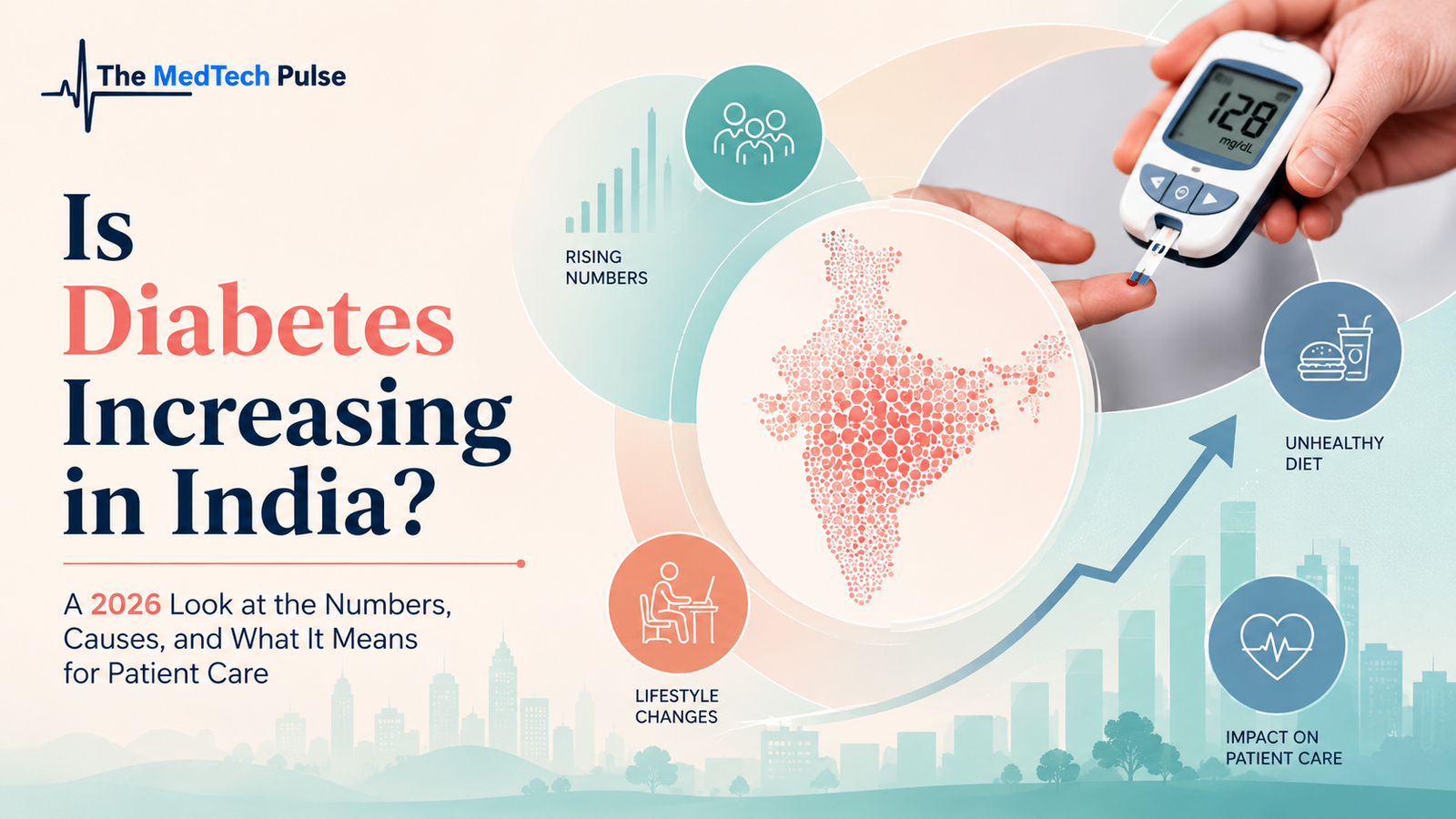
India has long been called the “diabetes capital of the world,” and the latest data confirms the title is well earned. With over 100 million adults living with diabetes and tens of millions more classified as prediabetic, the question isn’t really whether diabetes is rising in India — it’s how fast, and what healthcare providers, hospitals, and patients need to do about it.
The Current Diabetes Burden in India
According to recent national health estimates, more than 101 million adults in India are living with diabetes, while close to 136 million more fall into the prediabetes category — meaning a substantial share of the adult population is already affected or at serious risk of developing the condition. Globally, India now accounts for an estimated 89 million diabetes cases, making it the country with the second-largest diabetes burden in the world, trailing only China.
What makes these numbers especially concerning is the pace of change. Researchers project that the number of people living with diabetes in India could increase by roughly 68% by 2045. Compounding the problem is a large diagnosis gap: across South Asia, close to half of all adults with diabetes remain undiagnosed, and in India specifically, fewer than one in four patients on regular treatment achieve adequate glycaemic control.
The landmark ICMR-INDIAB study, conducted across all 31 Indian states and union territories between 2008 and 2020, remains the most comprehensive source of state-level diabetes prevalence data in the country, capturing not just diabetes but related cardiometabolic conditions like prediabetes, obesity, hypertension, and dyslipidemia.
Why Is Diabetes Rising So Fast in India?
Several overlapping factors are driving India’s diabetes epidemic:
1. Rapid urbanization and lifestyle shifts. Diabetes prevalence is markedly higher in urban India (around 11%) compared to rural areas (around 5%), reflecting sedentary work patterns, processed food consumption, and reduced physical activity associated with city living.
2. Genetic predisposition. South Asians, including Indians, tend to develop type 2 diabetes at a lower BMI and younger age than Western populations, largely due to higher visceral fat and insulin resistance patterns — a phenomenon often referred to as the “Asian Indian phenotype.”
3. Dietary transitions. A shift toward refined carbohydrates, sugar-dense foods, and calorie-rich diets, paired with declining traditional whole-grain and fiber intake, has accelerated metabolic risk across income groups.
4. Low awareness and screening gaps. Nearly half of diabetic individuals in India remain undiagnosed simply because routine screening isn’t part of standard preventive care in many regions, particularly rural and semi-urban belts.
5. Regional variation. Southern states like Kerala and Tamil Nadu, along with Punjab, consistently report higher diabetes prevalence than northeastern states, pointing to strong dietary and cultural influences on risk.
Why This Matters Beyond Endocrinology
Diabetes is rarely an isolated diagnosis — it’s a systemic condition with ripple effects across nearly every specialty in medicine, including surgery and wound management. Chronically elevated blood glucose impairs microvascular circulation and immune response, which directly affects how well tissue heals after any surgical or traumatic wound. For clinicians managing surgical incisions, diabetic foot ulcers, or post-operative recovery in diabetic patients, this translates into:
- Delayed wound healing timelines, requiring more vigilant post-op monitoring
- Higher infection risk, making secure, reliable wound closure critical
- Greater reliance on advanced closure techniques that minimize tension and tissue trauma in patients with compromised healing capacity
As India’s diabetic population grows, so does the volume of surgical procedures performed on patients with underlying glycemic complications — from cardiac and orthopedic surgeries to general surgical interventions. This makes the choice of wound closure method (sutures, staples, or a combination) an increasingly important clinical decision, not just a procedural afterthought. Surgeons and hospital procurement teams are placing growing emphasis on closure products engineered for consistency, tissue compatibility, and reduced complication rates — particularly in patient populations where healing is already compromised.
What Needs to Happen Next
Public health experts point to a few clear priorities for bending India’s diabetes curve:
- Scaling up community screening programs, especially in semi-urban and rural areas where diagnosis rates lag furthest behind
- Strengthening primary care infrastructure so diabetes management doesn’t fall solely on tertiary hospitals
- Investing in patient education around diet, physical activity, and early symptom recognition
- Equipping surgical and wound-care teams with training and tools suited to the realities of operating on a growing diabetic patient base
India’s National Multisectoral Action Plan has set ambitious targets to slow the rise in diabetes prevalence and reduce related mortality, but achieving them will require coordinated effort across public health systems, hospitals, and the medtech industry supporting them.
The Bottom Line
Yes — diabetes is increasing in India, and the trajectory suggests the burden will keep growing for at least the next two decades unless screening, prevention, and care infrastructure scale up significantly. For healthcare providers and medtech manufacturers alike, this isn’t just a public health statistic — it’s a signal to prepare for a patient population where comorbidities, delayed healing, and surgical complexity are becoming the norm rather than the exception.
This article is intended for informational purposes and does not constitute medical advice. Patients should consult a qualified healthcare provider for diagnosis and treatment guidance.
References
Lancet Regional Health – Southeast Asia. “Not One-Size-Fits-All: Diabetes in South Asia.” November 2025. https://www.ncbi.nlm.nih.gov/pmc/articles/PMC12676139/
“Planning a Community Approach to Diabetes Care in Low- and Middle-Income Countries Using Optimization.” arXiv, 2023. https://arxiv.org/pdf/2305.06426
“Prevalence of Diabetes in Urban and Rural India — ICMR-INDIAB Study.” Cardiometabolic Diseases, ScienceDirect, 2025. https://www.sciencedirect.com/science/article/abs/pii/B9780323954693000140
The Lancet Global Health. “Prevalence, Awareness, Treatment, and Control of Diabetes in India: A Nationally Representative Survey of Adults Aged 45 Years and Older.” 2023. https://www.thelancet.com/journals/langlo/article/PIIS2214-109X(23)00502-8/fulltext
“Prevalence of Diabetes in Urban and Rural India — ICMR-INDIAB Study.” ResearchGate. https://www.researchgate.net/publication/387612153_Prevalence_of_diabetes_in_urban_and_rural_India-ICMR-INDIAB_study
DEEP Trust. “Diabetes in India 2026: Statistics, Symptoms & Prevention.” June 2026. https://deepindia.org/diabetes-in-india-statistics-causes-symptoms-prevention/
Diabetes.co.in. “What Is the Prevalence of Diabetes in India? Current Data and Stats.” https://diabetes.co.in/article/what-is-the-prevalence-of-diabetes-in-india-current-data-and-stats