

Knee pain is one of the most common musculoskeletal complaints, affecting people of all ages — from weekend athletes to older adults managing osteoarthritis. While occasional soreness after a long walk or workout is usually nothing to worry about, persistent or worsening knee pain can be a sign of an underlying joint problem that needs medical attention. Understanding the difference between minor discomfort and a symptom requiring evaluation can help you protect your mobility and avoid long-term joint damage.
Common Causes of Knee Pain
Knee pain can stem from a wide range of causes, including:
- Osteoarthritis (OA): The most frequent cause of chronic knee pain, caused by the gradual breakdown of cartilage that cushions the joint.
- Ligament injuries: Tears to the ACL, MCL, or other ligaments, often from sports or sudden twisting movements.
- Meniscus tears: Damage to the cartilage that stabilizes and cushions the knee joint.
- Tendinitis or bursitis: Inflammation of the tendons or fluid-filled sacs around the knee, often from overuse.
- Rheumatoid arthritis: An autoimmune condition that causes joint inflammation and pain.
- Fractures or trauma: Direct injury to the kneecap, femur, or tibia.
Because so many conditions can cause similar symptoms, it’s important to pay attention to how your pain behaves over time — not just how it feels in the moment.
When Should You See a Doctor for Knee Pain?
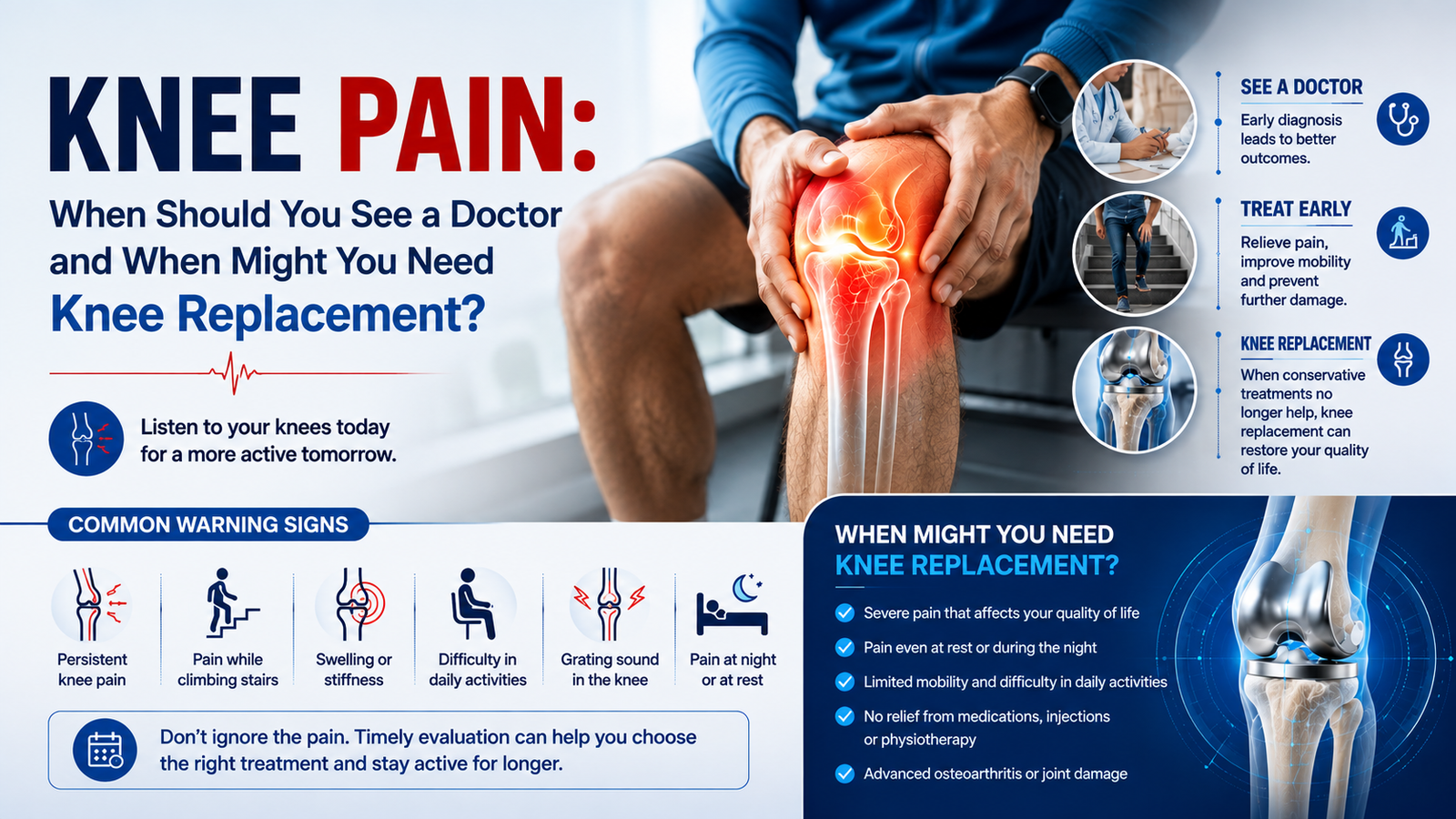
Not every ache requires a trip to the doctor, but certain warning signs suggest it’s time to schedule an appointment with an orthopedic specialist. Consider seeking medical evaluation if you experience:
- Pain that lasts more than a few weeks, especially if it doesn’t improve with rest, ice, or over-the-counter pain relief.
- Swelling or stiffness that limits your ability to bend or straighten the knee.
- Instability or a “giving way” sensation, which may indicate ligament or cartilage damage.
- Difficulty bearing weight or walking without significant discomfort.
- Visible deformity or an inability to fully extend or flex the joint after an injury.
- Redness, warmth, or fever near the joint, which could signal infection and requires urgent care.
- Pain that disrupts sleep or daily activities, such as climbing stairs, standing up from a chair, or exercising.
- A popping or locking sensation during movement, often associated with meniscus tears.
Early evaluation matters. Many knee conditions respond well to conservative treatments — physical therapy, activity modification, bracing, or anti-inflammatory medication — when caught early. Delaying care can allow minor issues to progress into more serious joint damage that limits treatment options later on.
Diagnosing the Source of Knee Pain
An orthopedic evaluation typically includes a physical exam to assess range of motion, stability, and swelling, along with imaging such as X-rays or MRI to visualize bone alignment, cartilage condition, and soft tissue damage. In some cases, your doctor may recommend blood tests to rule out inflammatory or autoimmune causes. This diagnostic process helps determine whether your knee pain can be managed conservatively or whether more advanced intervention is needed.
When Might You Need Knee Replacement Surgery?
For many patients, especially those with advanced osteoarthritis, conservative treatments eventually stop providing relief. Knee replacement surgery — also called total knee arthroplasty — may be recommended when:
- Chronic pain significantly limits daily function, such as walking, climbing stairs, or getting in and out of a car.
- Non-surgical treatments have been exhausted, including physical therapy, injections (corticosteroid or hyaluronic acid), weight management, and medication.
- X-rays show significant joint damage, such as bone-on-bone contact due to cartilage loss.
- Knee deformity is present, such as a noticeable bowing in or out of the leg.
- Pain persists at rest, not just during activity, and interferes with sleep.
- Quality of life is substantially affected, limiting independence or the ability to participate in activities you enjoy.
Knee replacement is typically considered a last resort after conservative treatments fail, but for the right candidate, it can dramatically reduce pain and restore mobility. Advances in surgical techniques, implant materials, and wound closure methods have made recovery faster and outcomes more predictable than in years past. Many patients today benefit from minimally invasive approaches and enhanced recovery protocols that support quicker return to daily activities.
Partial vs. Total Knee Replacement
Depending on the extent of joint damage, your surgeon may recommend:
- Total knee replacement (TKR): Replacing the entire joint surface with a prosthetic implant, typically for widespread cartilage loss.
- Partial knee replacement (PKR): Replacing only the damaged compartment of the knee, preserving more natural bone and tissue when damage is localized.
Your orthopedic surgeon will evaluate imaging, pain patterns, and lifestyle factors to determine which approach best supports your long-term joint health and recovery goals.
What to Expect After Knee Replacement Surgery
Recovery from knee replacement generally involves a hospital stay of one to a few days, followed by physical therapy to rebuild strength and range of motion. Most patients can resume light daily activities within a few weeks, with full recovery — including a return to low-impact exercise — often taking three to six months. Proper wound care and closure technique also play an important role in reducing infection risk and supporting smooth healing during the early recovery period.
Don’t Wait to Address Persistent Knee Pain
Knee pain that interferes with your daily life is not something you have to accept as a normal part of aging or an active lifestyle. Whether your symptoms point to a minor strain or a more serious degenerative condition, an early conversation with an orthopedic specialist can help you understand your options — from physical therapy and injections to advanced surgical solutions like knee replacement.
If you’re experiencing ongoing knee pain, swelling, or reduced mobility, don’t wait for symptoms to worsen. Speak with your healthcare provider to get an accurate diagnosis and a treatment plan tailored to your needs, so you can get back to moving comfortably and confidently.
This article is for informational purposes only and is not a substitute for professional medical advice. Always consult a qualified healthcare provider for diagnosis and treatment recommendations specific to your condition.