

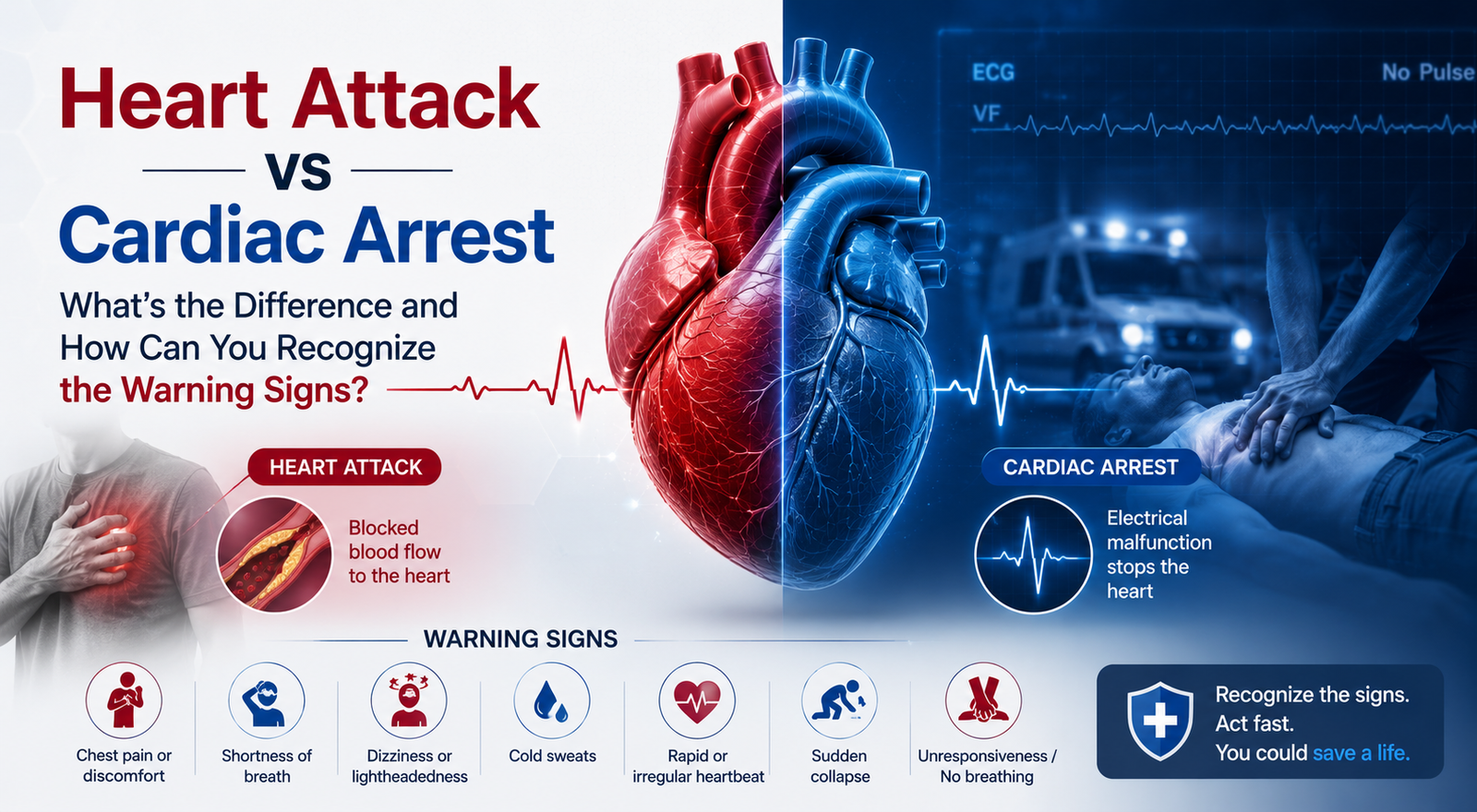
Many people use “heart attack” and “cardiac arrest” interchangeably, but these are two distinct cardiovascular emergencies with different causes, symptoms, and treatment protocols. Understanding the difference between a heart attack and cardiac arrest isn’t just medical trivia — it can mean the difference between life and death when seconds matter. Whether you’re a caregiver, a healthcare professional, or simply someone who wants to be prepared, knowing how to recognize the warning signs of each condition is essential.
What Is a Heart Attack?
A heart attack, medically known as myocardial infarction, occurs when blood flow to a part of the heart muscle is blocked, usually by a buildup of fat, cholesterol, and other substances that form a plaque in the coronary arteries. When this plaque ruptures, a blood clot can form and block blood flow, starving the heart muscle of oxygen. Without prompt treatment, that portion of the heart tissue begins to die.
Importantly, a heart attack is a circulation problem. The heart is usually still beating during a heart attack, even though it isn’t functioning normally.
Common Heart Attack Warning Signs
Heart attack symptoms can develop gradually, over minutes or even hours, and may include:
- Chest pain, pressure, tightness, or a squeezing sensation that may come and go
- Pain or discomfort spreading to the arms, back, neck, jaw, or stomach
- Shortness of breath, with or without chest discomfort
- Cold sweats, nausea, or lightheadedness
- Unusual fatigue, particularly in women, who are more likely to experience atypical symptoms
Symptoms in women can be subtler than the classic “elephant on the chest” description often associated with men, which is part of why heart disease is frequently underdiagnosed in female patients.
What Is Cardiac Arrest?
Cardiac arrest is a electrical problem. It happens when the heart’s electrical system malfunctions, causing an irregular heartbeat (arrhythmia) that disrupts the heart’s pumping action. The heart suddenly stops beating effectively, blood stops flowing to the brain and other vital organs, and the person loses consciousness almost immediately.
Sudden cardiac arrest (SCA) is one of the leading causes of death, and survival often depends on how quickly bystanders act. Unlike a heart attack, cardiac arrest can occur with little to no warning — and it can happen to someone who has just had a heart attack, since damaged heart tissue increases the risk of dangerous arrhythmias.
Common Cardiac Arrest Warning Signs
Because cardiac arrest strikes without warning, recognizing it comes down to observing sudden physical changes:
- Sudden loss of responsiveness — the person doesn’t respond to shouting or shaking
- No normal breathing, or only gasping
- No pulse
- Sudden collapse
There is typically no time to “notice symptoms” before cardiac arrest occurs — this is what makes it so dangerous and why immediate action is critical.
Key Differences at a Glance
| Feature | Heart Attack | Cardiac Arrest |
|---|---|---|
| Underlying problem | Blocked blood flow (circulation) | Electrical malfunction |
| Onset | Often gradual | Sudden, immediate |
| Heart rhythm | Usually still beating | Stops beating effectively |
| Consciousness | Usually remains conscious | Loses consciousness immediately |
| Immediate response | Call emergency services, chew aspirin if advised | Call emergency services, begin CPR, use an AED |
Why This Distinction Matters for Emergency Response
Because the two conditions require different immediate actions, understanding which one is happening changes how bystanders and clinicians respond:
For a suspected heart attack: Call emergency services immediately, keep the person calm and seated, and avoid physical exertion. Time-to-treatment is critical for minimizing heart muscle damage, which is why the phrase “time is muscle” is often used in cardiology.
For cardiac arrest: This is a true emergency requiring immediate CPR (cardiopulmonary resuscitation) and, if available, use of an automated external defibrillator (AED). Every minute without CPR or defibrillation reduces survival chances significantly. Bystander CPR, started before emergency responders arrive, can double or triple a person’s chance of survival.
How Healthcare Providers and Facilities Can Prepare
For hospitals, surgical centers, and clinical teams, preparedness goes beyond individual recognition of symptoms. It includes:
- Ensuring AEDs are accessible and staff are trained in their use
- Running regular emergency response drills for cardiac events
- Maintaining clear protocols for rapid triage of chest pain patients
- Educating patients on cardiovascular risk factors during routine visits
- Equipping surgical and cardiac care teams with reliable closure technologies to support efficient, secure procedures when cardiac interventions are required
Prevention: Reducing Your Risk
While not all cardiac events can be prevented, many of the risk factors for both heart attack and cardiac arrest are shared and modifiable:
- Manage blood pressure and cholesterol levels
- Avoid tobacco use
- Maintain a heart-healthy diet low in saturated fats and sodium
- Exercise regularly, as approved by a healthcare provider
- Manage diabetes and other chronic conditions
- Attend regular check-ups to monitor cardiovascular health
The Bottom Line
A heart attack and cardiac arrest are related but fundamentally different cardiovascular events. A heart attack is a circulation problem caused by blocked blood flow to the heart muscle, while cardiac arrest is an electrical problem that causes the heart to stop beating altogether. Recognizing the distinct warning signs of each — and knowing how to respond — can significantly improve outcomes for patients and loved ones alike.
For clinicians and care teams, staying current on cardiac emergency protocols, maintaining well-stocked emergency equipment, and continuing patient education are all essential components of comprehensive cardiovascular care.
This article is intended for general educational purposes and does not substitute for professional medical advice. If you or someone near you is experiencing symptoms of a heart attack or cardiac arrest, call emergency services immediately.